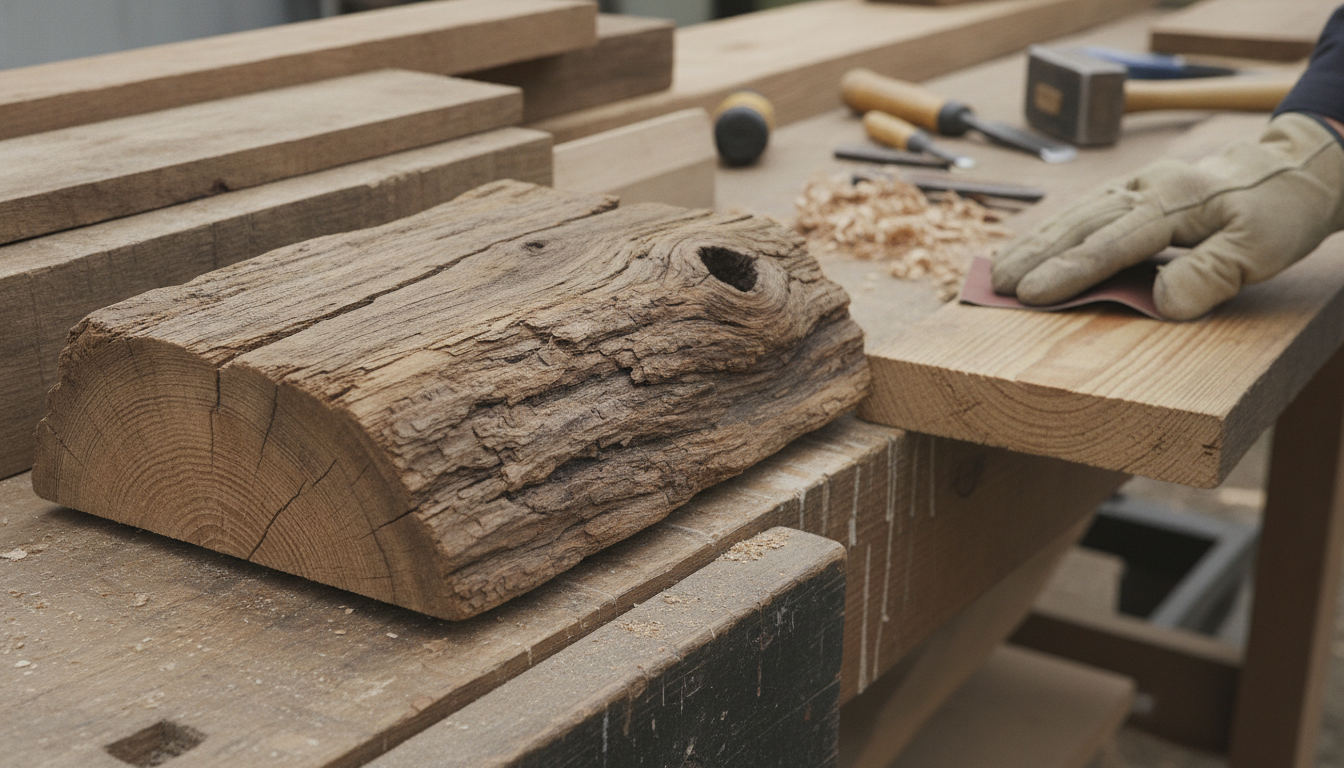
Rustic wood is lumber that intentionally showcases the natural “character” of a tree rather than hiding it. Instead of aiming for perfectly uniform color and grain, rustic wood highlights visible knots, mineral streaks, small checks (fine cracks), wormholes, and grain variation—details that make each board look one-of-a-kind. It’s popular for furniture, shelving, flooring, beams, wall paneling, and décor where a warm, lived-in feel is part of the design.
Clear or select grades are chosen for minimal defects and a consistent appearance. Rustic wood, by contrast, allows (and often seeks out) natural features that many mills would otherwise sort out. That doesn’t mean rustic wood is low quality; it simply prioritizes a distinctive look over visual uniformity.
Depending on the species and cut, rustic wood may include tight or open knots, color variation from heartwood to sapwood, subtle surface splits, and pronounced grain patterns. Some products keep these features as-is, while others stabilize them with filler or resin and then sand everything smooth for easier cleaning and finishing.
Rustic wood fits especially well in farmhouse, cabin, industrial, and modern organic styles. It’s often chosen for statement pieces—like a dining tabletop or mantel—because the natural markings create visual movement. For high-wear or moisture-prone areas, a durable finish (such as polyurethane or a hardwax oil) helps protect the surface while still letting the wood’s character show.
For deeper examples, species notes, and finish considerations, visit the full guide: https://illusica.com/what-is-a-rustic-wood/.
For Rustic Wood Explained: Character, Uses, and Finishes, the best answer depends on fit, material, care instructions, and how the product will be used day to day.
Yes—rustic wood is widely used for furniture because it’s visually interesting and forgiving of everyday wear. A quality build and the right protective finish matter more than the presence of knots or color variation.








Leave a comment