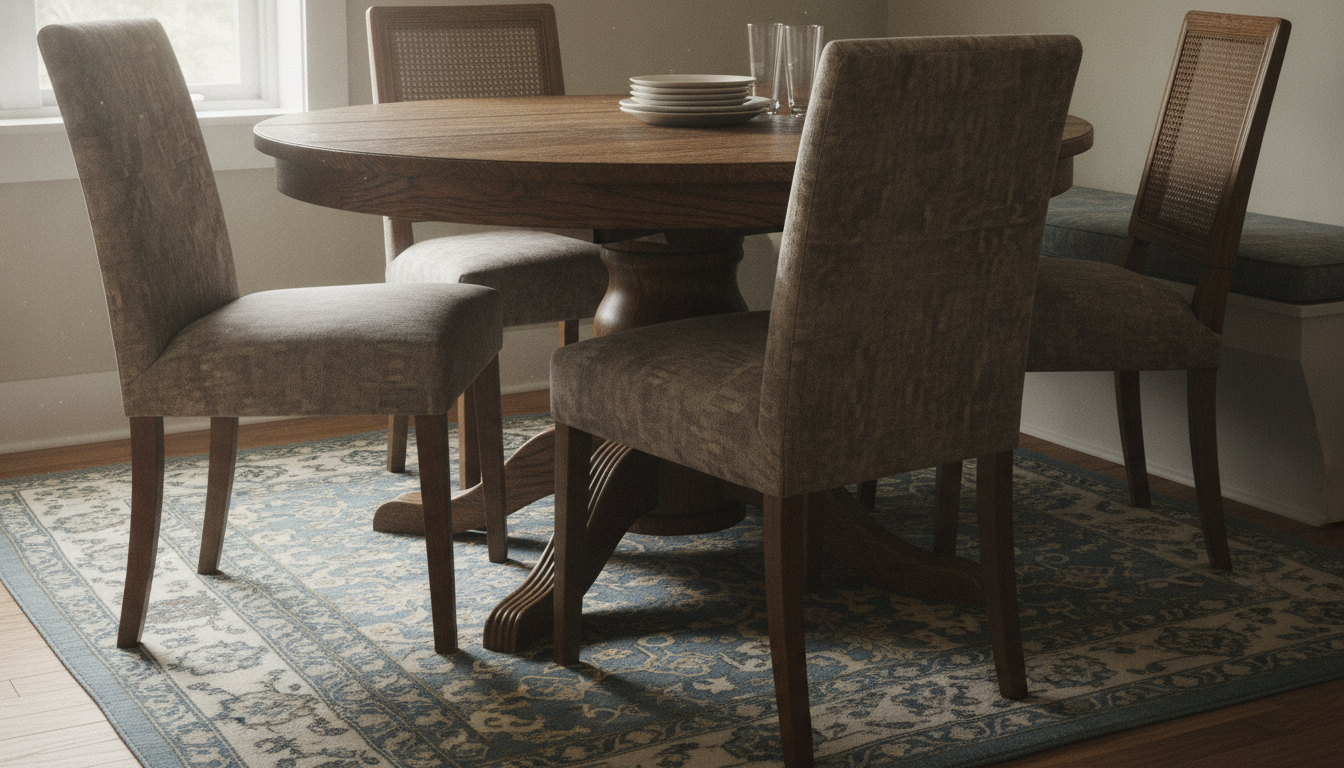
Round dining tables are popular for their cozy, conversational feel, but they’re not the perfect fit for every room or household. Before committing, it helps to know where round shapes can fall short—especially for layout, seating, and everyday function.
A round tabletop needs open clearance on all sides. In long, skinny dining areas, that circular footprint can create awkward “dead zones” near walls and reduce comfortable walkways compared with a rectangular table that tucks neatly into the room’s shape.
If the dining area doubles as a hallway or kitchen pass-through, pushing a table against a wall can be a practical trick. Round tables don’t align cleanly with walls, so you usually lose that flexibility—along with some space-saving options in small apartments or eat-in kitchens.
While round tables feel friendly for four to six people, adding more guests can get tricky. You may need a much larger diameter to seat eight or more comfortably, and that larger size can overwhelm the room. Also, without defined “sides,” place settings can end up closer together than expected.
Many round tables use a pedestal base to avoid corner legs, but bulky bases can interfere with feet and chairs—especially if guests like to tuck in close. With some designs, everyone ends up negotiating for the best knee space.
If hosting often means lining up platters, setting up place cards, or creating a buffet-style spread, rectangles and ovals can be easier. A round table concentrates everything toward the middle, which can feel cramped when serving multiple dishes.
For a deeper look at space-smart layouts and hosting-friendly options, see this guide to round extendable dining table sets.
Yes—an extendable round table can stay compact day to day and expand only when needed. It’s often a practical way to balance open floor space with the ability to host.









Leave a comment