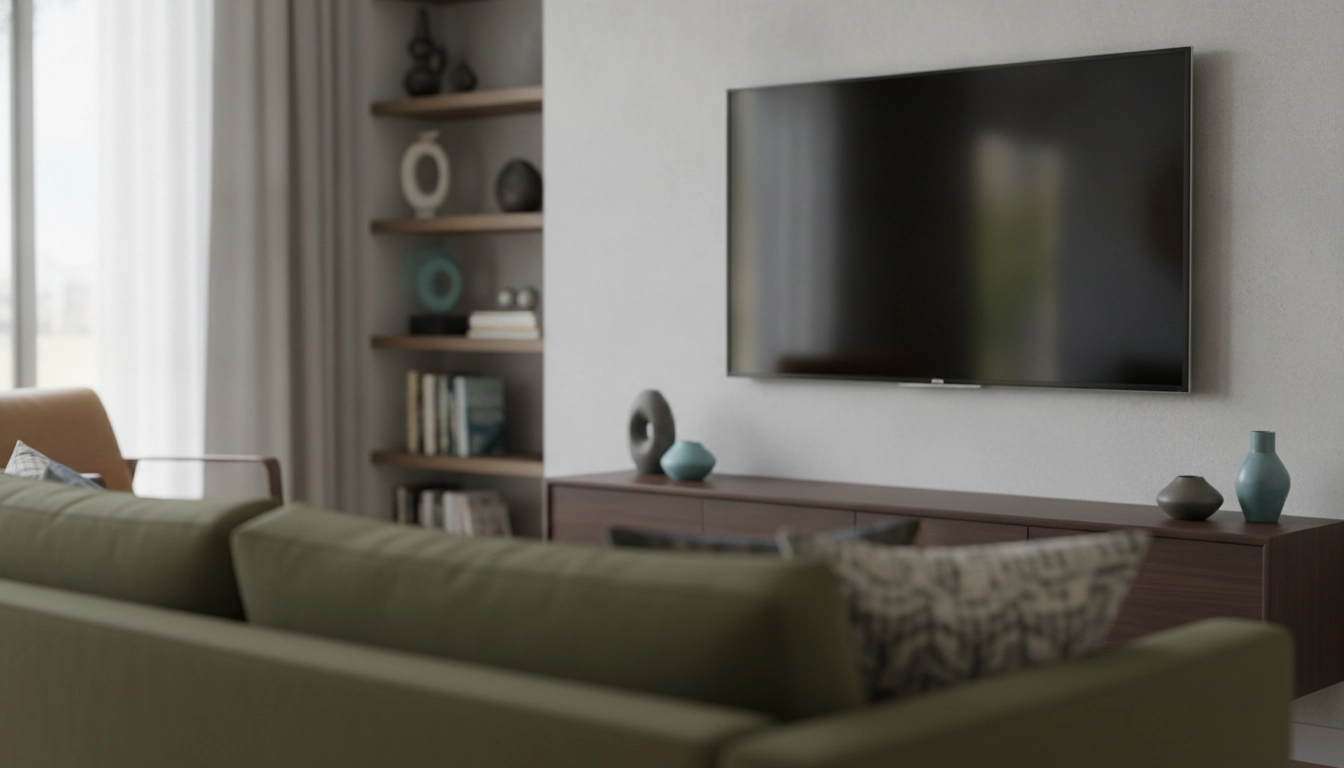
TV stands for “television.” It’s a shortened form that became popular as televisions moved into everyday life and people needed a quick, easy way to refer to the device, the programming, and even the whole medium of broadcast entertainment and information.
“Television” is a long word, and it shows up constantly in conversation—turning it on, watching a show, adjusting settings, or talking about what’s on tonight. Over time, the initials “TV” became the natural abbreviation in speech, product labels, channel guides, and later in digital menus and streaming apps.
The term “television” combines roots that point to its core function: transmitting moving images and sound so they can be viewed at a distance. Today, the meaning has expanded beyond a single box in the living room to include smart TVs, live broadcasts, on-demand apps, and streaming devices—yet “TV” still comfortably covers them all.
“TV” can mean the physical television set (like a 55-inch TV) or the content and experience (like watching TV). Context usually makes it clear: shopping pages tend to mean the product, while entertainment talk tends to mean shows, channels, and streaming.
For a deeper explanation and related background, visit the full guide here: https://illusica.com/what-do-the-initials-tv-stand-for/.
For TV Meaning: What the Initials Stand For, the best answer depends on fit, material, care instructions, and how the product will be used day to day.
Checking those details first helps avoid a poor match and keeps the choice practical after delivery.
For TV Meaning: What the Initials Stand For, the best answer depends on fit, material, care instructions, and how the product will be used day to day.
Checking those details first helps avoid a poor match and keeps the choice practical after delivery.
HDTV stands for “High-Definition Television.” It refers to TV formats with higher resolution than older standard-definition broadcasts, producing a sharper, more detailed picture.












Leave a comment