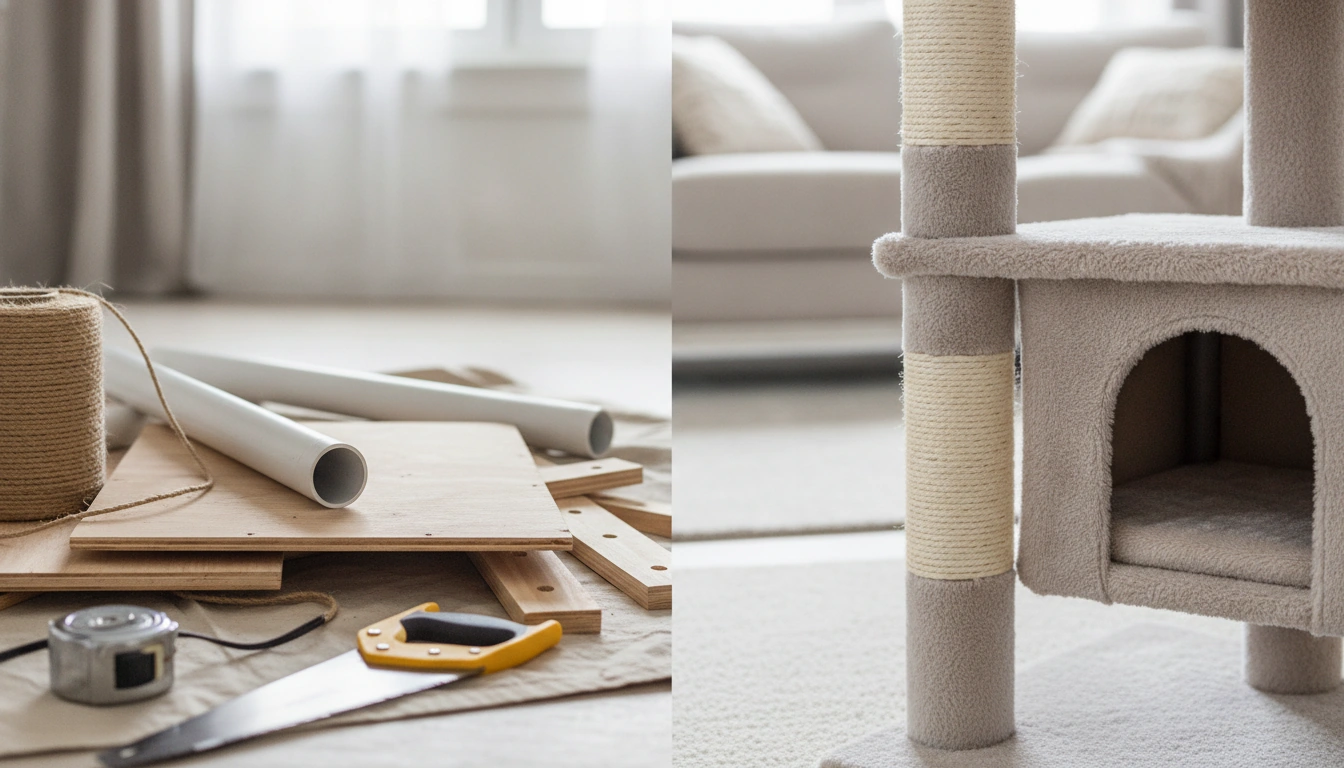
It depends on what “cheaper” means for the setup you want. A basic DIY cat tower can cost less than a mid-range store-bought model if you already have tools and can source affordable materials. But once you add quality carpet or sisal, sturdy plywood, hardware, and pet-safe finishes, the total can climb quickly—sometimes matching or exceeding the price of a ready-made tower with similar height and features.
DIY tends to win on price when you’re aiming for a simple design: a stable base, one or two platforms, and a couple of scratching posts. It’s also more economical if you can reuse materials (leftover wood, carpet remnants, or scrap fabric) and you don’t need to buy tools. Custom builds can also reduce waste by fitting a tight corner or odd space, so you’re not paying for features you won’t use.
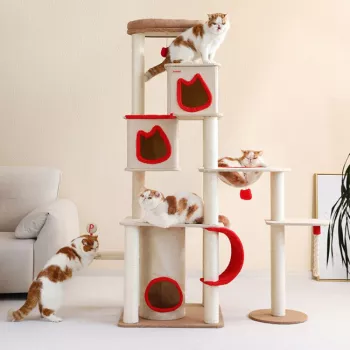
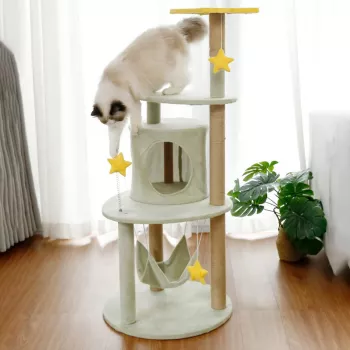
Buying often costs less when you want multiple levels, condos, ramps, thick posts, or a tall structure that stays stable. Mass-produced towers benefit from cheaper bulk materials and standardized manufacturing. It can also be less expensive in “real-world” terms when you factor in time, mistakes, and the cost of replacing worn carpet or loose posts after an early DIY attempt.
Material quality is the biggest swing. Solid wood, thicker posts, and durable sisal raise DIY costs, while bargain materials can lower the price but may not hold up to heavy scratching or larger cats. Safety and stability matter too: wide bases, secure brackets, and proper anchoring add cost but help prevent tipping.
For a deeper breakdown of price, materials, and trade-offs, visit the full guide here: Is it cheaper to build or buy a cat tower?.
Thick, tightly wrapped sisal on scratching posts and solid wood or dense engineered wood for platforms tend to last longer. Sturdier fasteners and a heavier base also improve longevity and stability.










Leave a comment