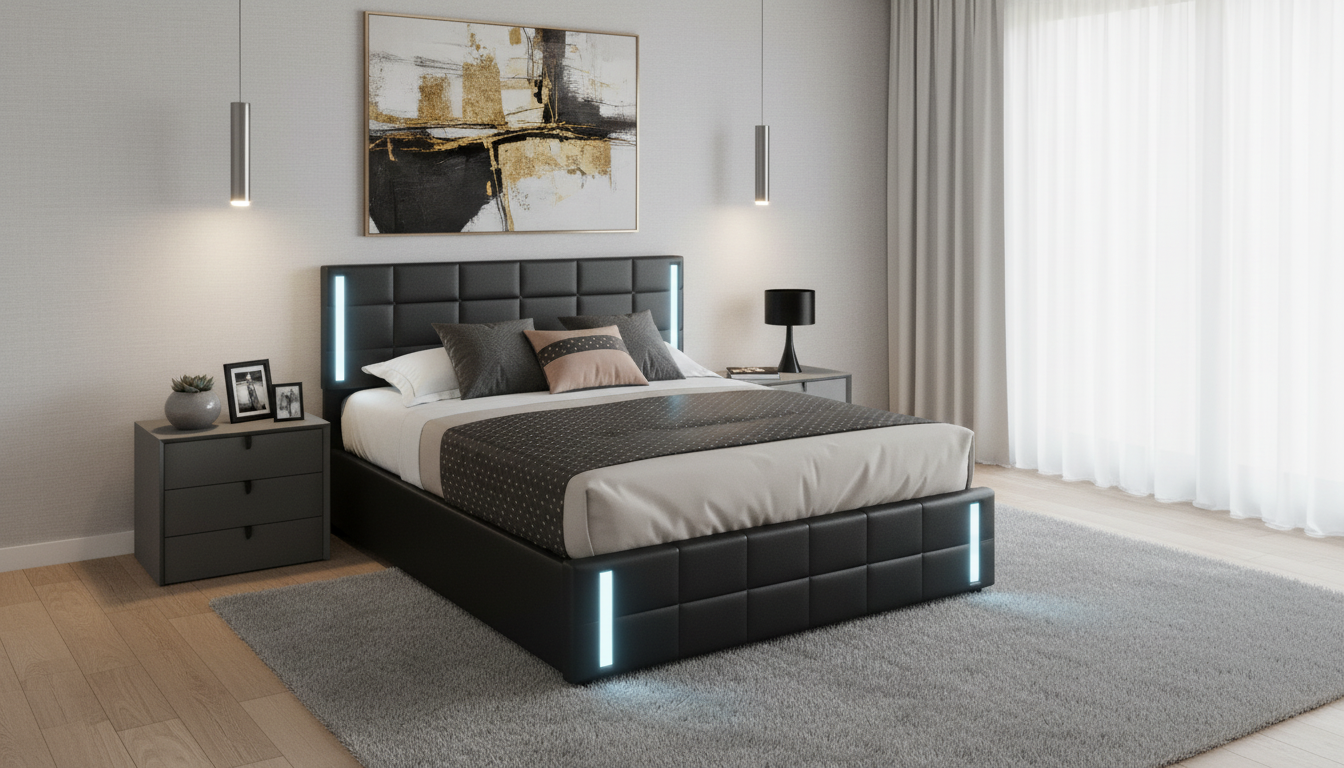
A queen platform bed is essentially a low, rigid deck that supports your mattress without a box spring. The most dependable approach is to build a rectangular frame, add a center support beam with legs, and top it with evenly spaced slats (or a solid deck, if your mattress allows it). With careful measuring and sturdy fasteners, you can make a platform that feels rock-solid and looks clean and modern.
A standard queen mattress is 60 inches wide by 80 inches long. Many builders make the platform slightly larger (about 1/4–1/2 inch of clearance) so the mattress drops in without binding. For strength, plan for perimeter rails plus a center beam running head-to-foot; this center support is especially important for preventing sag and squeaks.
Cut your lumber for two long side rails and two end rails, then assemble a square frame with wood glue and structural screws. Check for square by measuring corner-to-corner diagonals; if both diagonals match, your frame is square. Add corner blocking or brackets if you want extra rigidity, particularly if the bed will be moved often.
Install a center beam from the head to the foot of the bed and support it with legs that reach the floor (commonly one near each end and one in the middle). Then attach slats across the width of the frame, keeping spacing tight enough for your mattress type (often around 2–3 inches apart). Sand edges, then finish with paint, stain, or clear coat and let it cure before placing the mattress.
For a full materials list, step-by-step cuts, and build notes, follow the complete guide here: https://illusica.com/how-to-build-a-platform-for-a-queen-size-bed/.
Yes—most queen platforms benefit from a center beam with legs to the floor to prevent sagging and extend mattress life. It also helps reduce movement and noise over time.










Leave a comment