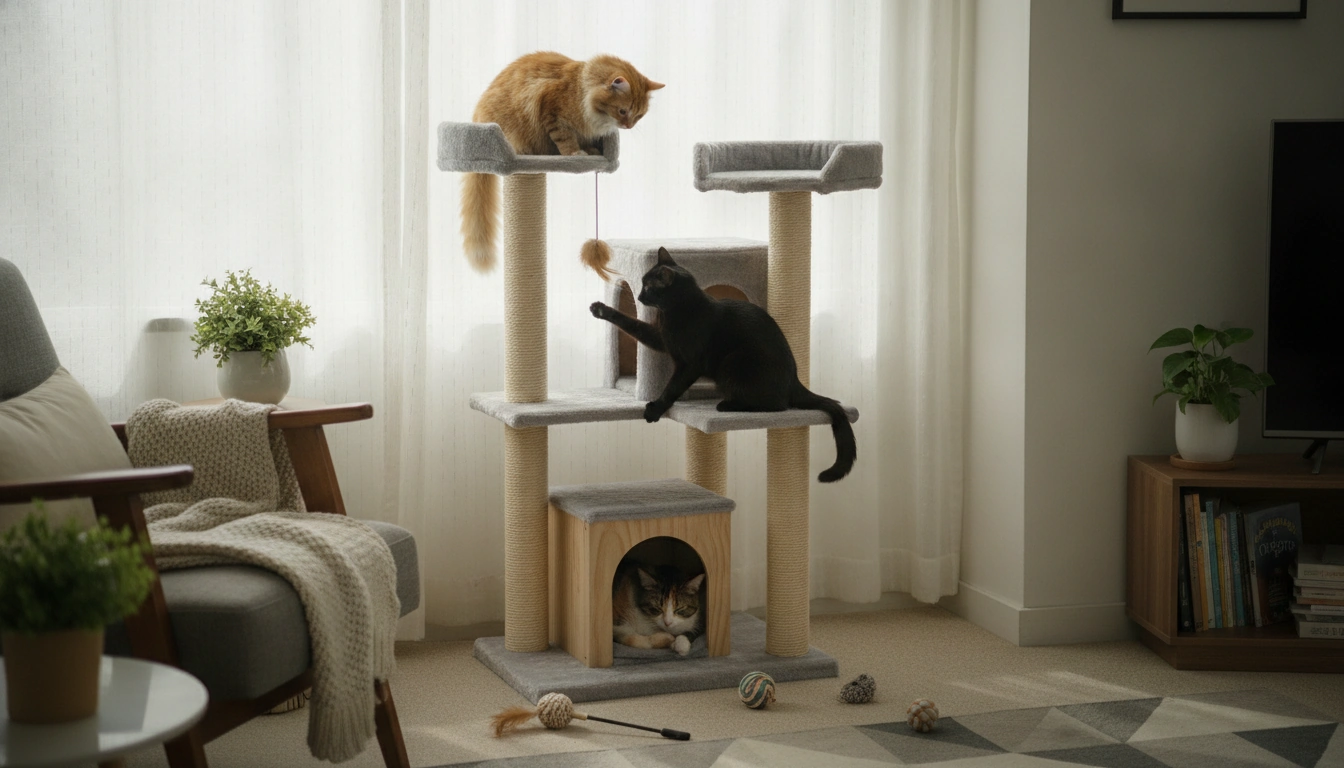
Most cats do like cat towers—especially when the tower matches how cats naturally want to live: climbing up high, scratching, watching their “territory,” and napping in a protected spot. A good tower can become a daily hangout because it combines several needs in one place: vertical space, a stable scratching surface, and a comfortable perch.
That said, not every cat takes to a tower right away. Some cats need time to feel safe on it, while others may ignore a tower that wobbles, smells unfamiliar, or is placed in a quiet corner away from household activity. Kittens often jump in quickly, while older or less agile cats may prefer lower platforms, ramps, or wide steps.
Height and location are big drivers. Many cats prefer a perch near a window or in the same room where people spend time. Stability matters just as much: if the base shifts even once, cautious cats may avoid it. Materials also play a role—sisal for scratching, soft but grippy fabric for climbing, and a roomy top platform for lounging.
Place the tower where your cat already likes to hang out, then make it “worth it.” Sprinkle a little catnip (if your cat responds to it), place a favorite toy on a mid-level platform, or offer treats on the steps to encourage exploration. If your cat already scratches the couch, put the tower nearby so the scratching post becomes the easier, better option.
Some cats prefer simpler setups: a single scratching post, a window perch, or a low, enclosed bed. If your cat is nervous, a tall open tower can feel exposed. If your cat is heavy-bodied or senior, narrow ledges and steep jumps can make the tower uncomfortable. Choosing the right design usually matters more than the idea of a tower itself.
For a deeper look at what cats tend to prefer and how to choose the right setup, visit https://illusica.com/do-most-cats-like-cat-towers/.
Put it near a window or in a room where your cat already spends time. A stable corner placement can also make the tower feel safer and reduce wobble.










Leave a comment