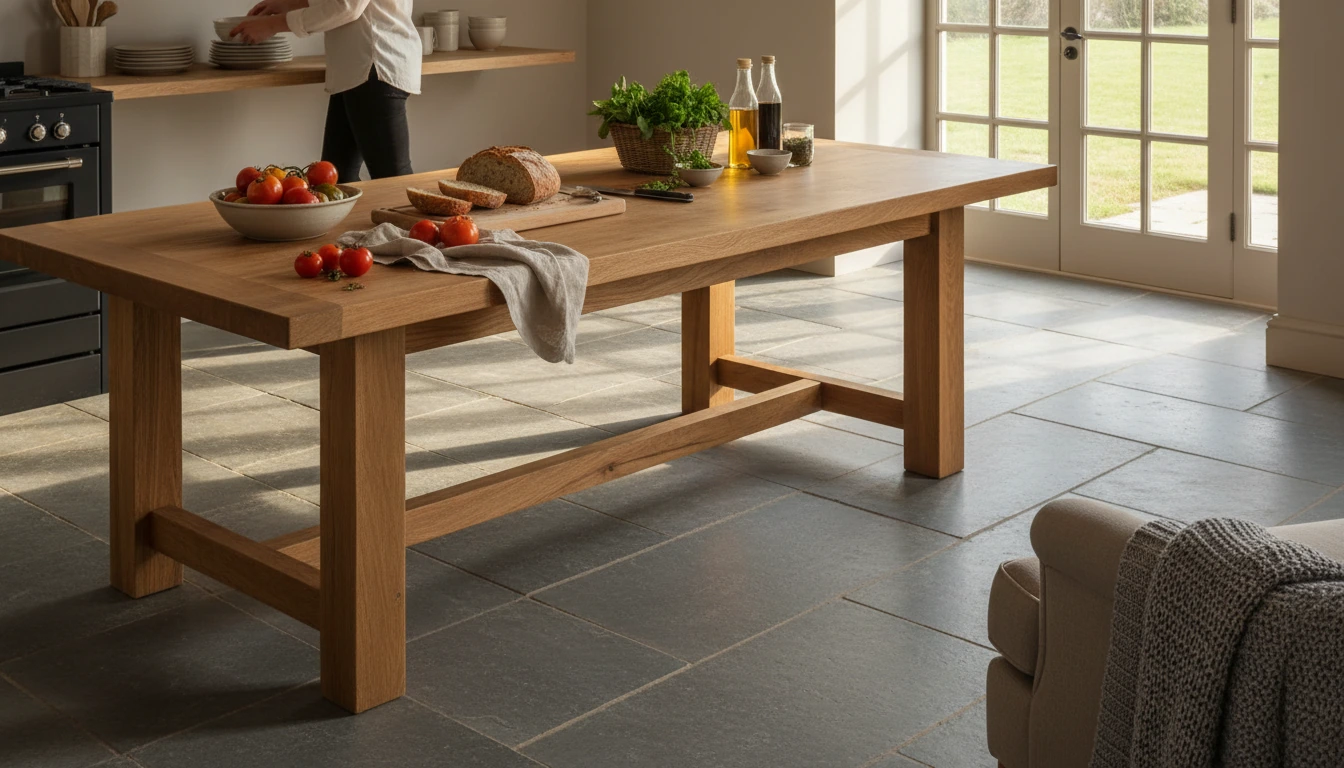
Often, yes—especially when the table is a daily-use piece and longevity matters. Solid wood tables tend to outlast veneer or particleboard options because the core material is durable, repairable, and less prone to catastrophic failure. Instead of swelling, delaminating, or crumbling at the edges over time, solid wood can be maintained, refinished, and brought back to life after years of wear.
What makes the price feel “worth it” is how solid wood holds up to real life: sliding plates, kids’ homework, hot mugs (with a coaster), and frequent cleaning. Many scratches and dents can be sanded down, and a tired finish can be re-stained or resealed rather than forcing a replacement. That ability to refresh the surface is a big part of the long-term value.
Solid wood also tends to look better as it ages. Natural grain variation, depth, and patina can make the table feel more personal over time, rather than simply “used.” If a home’s style changes, a solid wood table can often be updated with a new finish, different chairs, or new hardware—another way it can stretch the initial investment.
That said, solid wood isn’t always the right spend. If the table will live in a high-moisture environment, face constant direct sunlight, or needs to be extremely lightweight or temporary, a lower-cost alternative may make more sense. Wood movement (seasonal expansion and contraction) is normal, so choosing a well-built table with proper joinery and finish is key.
For a deeper breakdown of costs, durability, and what to look for when shopping, visit https://illusica.com/are-solid-wood-tables-worth-the-cost/.
For Solid Wood Tables: Worth the Cost for Daily Use?, the best answer depends on fit, material, care instructions, and how the product will be used day to day.
Dust regularly with a soft cloth, wipe spills quickly, and use coasters and trivets to protect the finish. For deeper care, use a cleaner designed for finished wood and reapply a protective polish or wax only if recommended for that finish.










Leave a comment