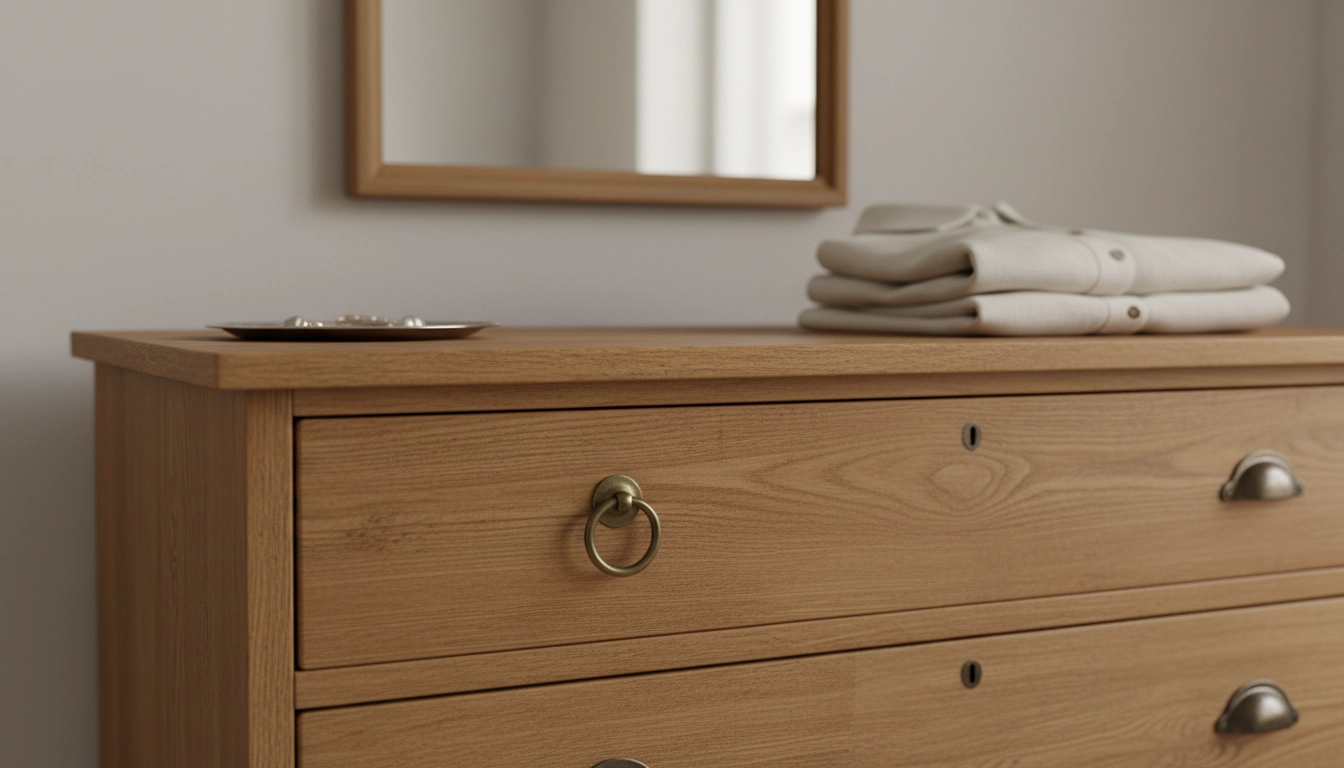
A dresser with drawers is most commonly called a dresser or a chest of drawers. In everyday American usage, “dresser” is the go-to term for a wide, low storage piece—often used in bedrooms for clothing and linens—while “chest of drawers” can describe both tall, narrow styles and wider drawer units, depending on the design.
Dresser: Typically a wider piece with multiple drawers, often waist-high. Some dressers are paired with a mirror (sometimes called a “dresser and mirror” set).
Chest of drawers: A general term for a drawer-based storage cabinet. When it’s tall and narrow, it’s often specifically called a tall chest or highboy.
Bureau: A regional synonym for dresser (more common in parts of the Northeast). In many catalogs, it’s interchangeable with “dresser.”
Chest: Short for chest of drawers, though “chest” can also refer to other storage furniture, so product listings usually specify “of drawers.”
When a dresser is used in a living room or media space, it may be marketed as a TV stand, media console, or entertainment center—especially if it has cord cutouts, a long top surface, or a layout designed for electronics. Many farmhouse and rustic styles blur the line between bedroom storage and media furniture.
For a practical example of a dresser that doubles as a TV stand, see this guide: Rustic Grey 6-Drawer Farmhouse Dresser TV Stand Guide.
For Dresser vs Chest of Drawers: What It’s Called, the best answer depends on fit, material, care instructions, and how the product will be used day to day.
Checking those details first helps avoid a poor match and keeps the choice practical after delivery.
A dresser is usually wider and lower, while a chest of drawers is a broader category that often includes taller, narrower pieces. Retailers sometimes use the terms interchangeably, so dimensions are the best clue.











Leave a comment