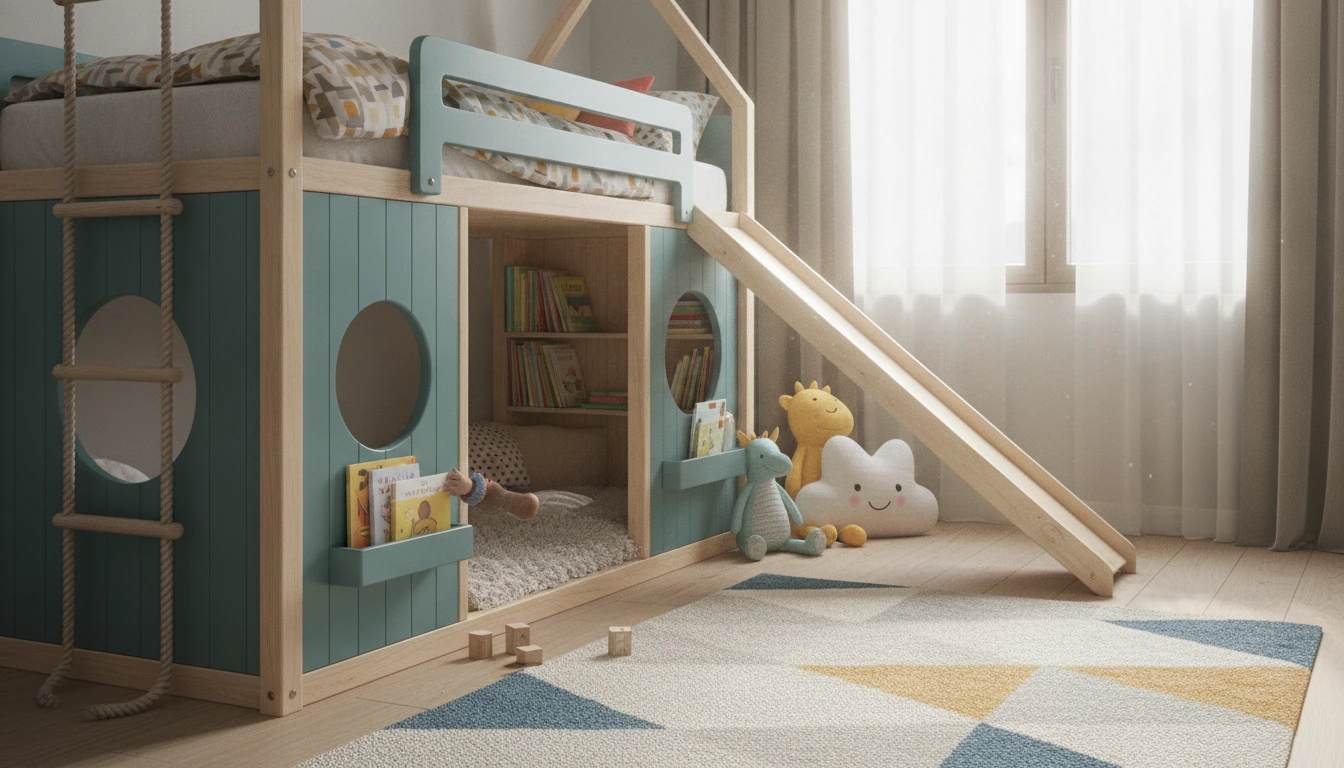
The coolest kids beds combine imagination with everyday practicality. The standout styles usually look like something a child can play in (or show off on a video call) while still being comfortable, sturdy, and easy for parents to maintain. Think bold silhouettes, smart storage, and designs that grow with a child’s changing interests.
Popular “cool” options include house-frame beds that feel like a mini hideout, loft beds that turn the space underneath into a reading nook or play zone, and themed beds inspired by adventures (like castles, cabins, or race cars). For shared rooms or sleepovers, bunk beds and trundle beds stay at the top of the list because they solve a real problem and still look fun.
Loft beds are a favorite because they transform one footprint into two zones: sleep up top, activity below. House beds feel cozy and personalized—string lights, curtains, and wall decals can make them unique without locking you into a single theme. Canopy or tent-style beds add instant “fort” energy, while modern platform beds can still be cool when they feature hidden drawers or LED-friendly headboards.
“Cool” is even better when it’s functional. Built-in drawers, cubbies, or book ledges keep rooms tidier. Rounded edges and guardrails help with safety, and a low-to-the-ground profile can be ideal for younger kids transitioning out of a crib. Durable finishes and easy-to-clean materials matter, especially for light colors and high-touch areas like rails and ladders.
Start with the room layout and ceiling height, then match the bed style to how the space is used—sleep only, sleep + study, or sleep + play. Finally, choose a look your child will still like in a year or two (neutral frames with swappable accessories are a smart way to keep it fresh).
For more examples and ideas, visit the full guide here: https://illusica.com/what-are-the-coolest-kids-beds/.
Many families wait until around age 6 and up, when kids can reliably climb a ladder and follow safety rules. Always follow the manufacturer’s age and weight recommendations for the specific model.









Leave a comment