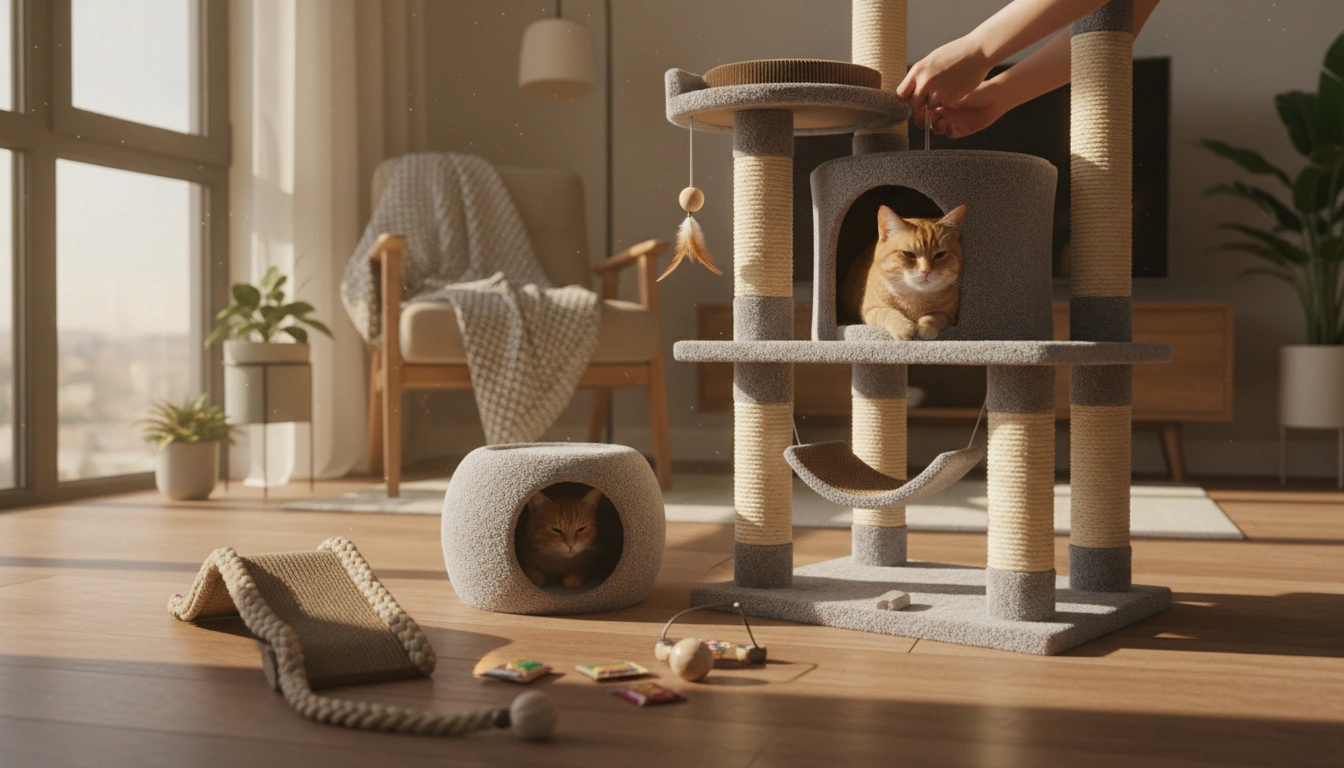
A cat tower becomes more engaging when it offers variety: different textures to scratch, things that move, cozy places to hide, and small “rewards” that encourage climbing and exploring. The goal is to turn the tower into a mini territory your cat can hunt, perch, nap, and scratch on throughout the day.
Clip-on wand toys, teaser attachments, or dangling balls can spark play, but cats get bored if the same toy hangs there forever. Keep two or three options and swap them weekly. Use sturdy clips and keep strings short enough to reduce tangling.
If your cat ignores the posts, add a new scratch material: sisal rope wrap, corrugated cardboard panels, or a scratch mat attached to a platform. Some cats prefer vertical scratching; others love a flat “scratch pad” style surface on a shelf.
Attach a soft hammock, add a fleece throw, or place a snug bed insert in a cubby. Many cats engage more with a tower when it includes a secure, covered spot plus at least one open perch for lounging and watching the room.
Consider adding a step shelf, an extra platform, or a ramp to make routes up and down more interesting—especially for kittens with high energy. For adult or senior cats, prioritize wider steps and stable, non-slip surfaces.
Rub a little catnip or silvervine on scratch areas (if your cat responds to it), or tuck a few treats into a small puzzle toy placed on a platform. This encourages investigation and reinforces the tower as a fun place to return to.
For more ideas and a fuller checklist of upgrades, visit the main guide on making a cat tower more engaging.
Rotate toys and textures, move the tower near a window or social area, and occasionally add treats or catnip to reintroduce novelty. Small changes every week or two keep it “new” without stressing your cat.










Leave a comment