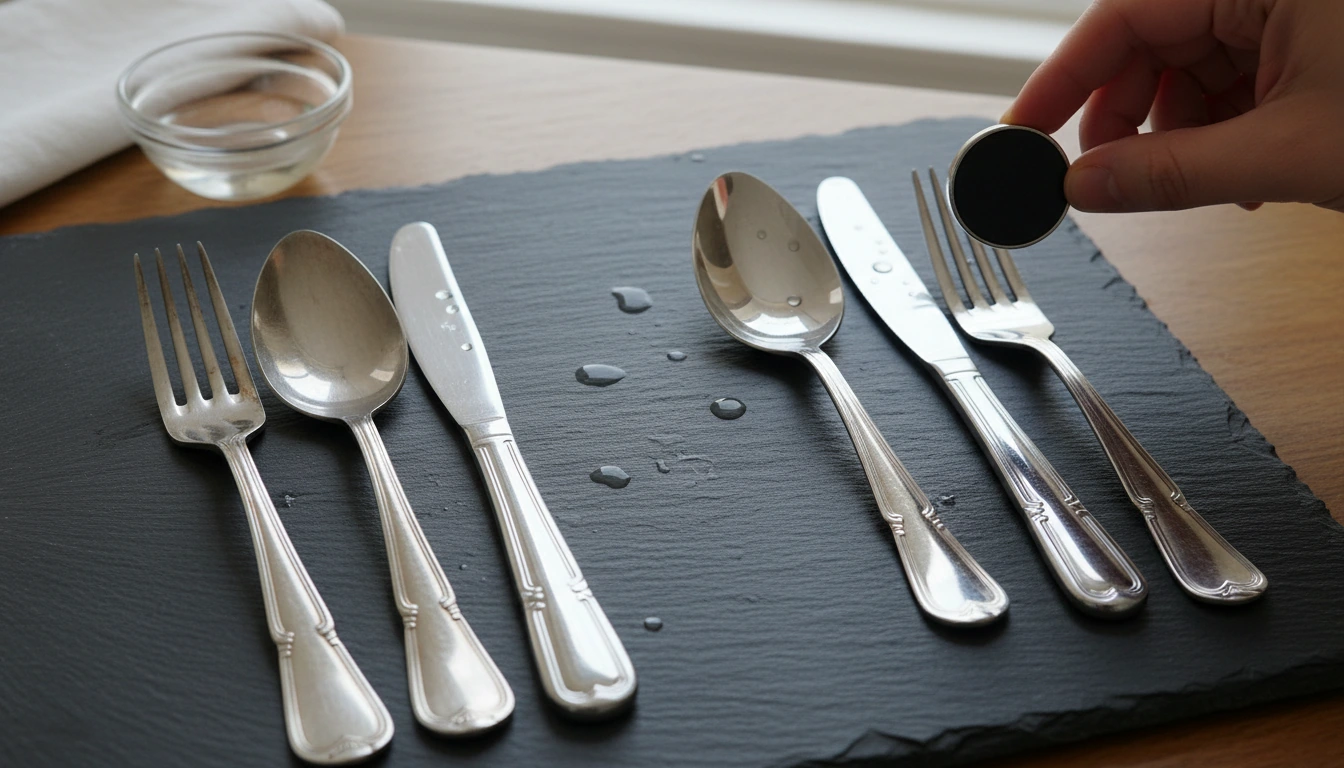
Stainless steel flatware usually has a few easy tells: it’s non-magnetic or only slightly magnetic, resists rust and staining, and often carries a stamped grade on the back of the handle. When you’re sorting a mixed drawer of forks and spoons, look for a combination of markings, weight, and how the surface has held up over time.
Flip the utensil over and check the handle for stamps such as “18/10,” “18/8,” “18/0,” “AISI 304,” or “stainless.” These indicate chromium and nickel content (higher numbers often mean better corrosion resistance and shine retention). Some pieces may only show a maker’s mark plus “stainless,” which is still a strong indicator.
Many common stainless flatware alloys are only weakly magnetic, while some are more magnetic depending on the steel structure and how it was formed. A strong “snap” to the magnet can suggest lower-nickel stainless (like some 18/0) or even non-stainless steel, but a weak pull doesn’t automatically mean it’s not stainless.
Stainless steel tends to develop fine, even scratches from daily use rather than flaking plating. If you see peeling, bubbling, or brassy/copper tones showing through, the piece may be plated rather than solid stainless.
Quality stainless shouldn’t rust from normal kitchen use. Tiny orange spots can happen from dishwasher chemistry or contact with carbon steel; they often scrub off. Persistent rust pits, heavy discoloration, or a strong metallic odor after washing can point to non-stainless material or poor-quality steel.
Stainless flatware typically feels solid and balanced. Very lightweight pieces can still be stainless, but they’re more likely to bend easily and show faster wear, especially at the neck (where the handle meets the bowl or tines).
For a deeper look at identifying materials and finishes in vintage metal goods, see the guide at https://illusica.com/guide-vintage-korean-stainless-steel-clip-on-hoop-earrings/.
It means the steel is about 18% chromium and 10% nickel. This blend is widely used for flatware because it’s highly resistant to corrosion and tends to keep a bright shine.










Leave a comment