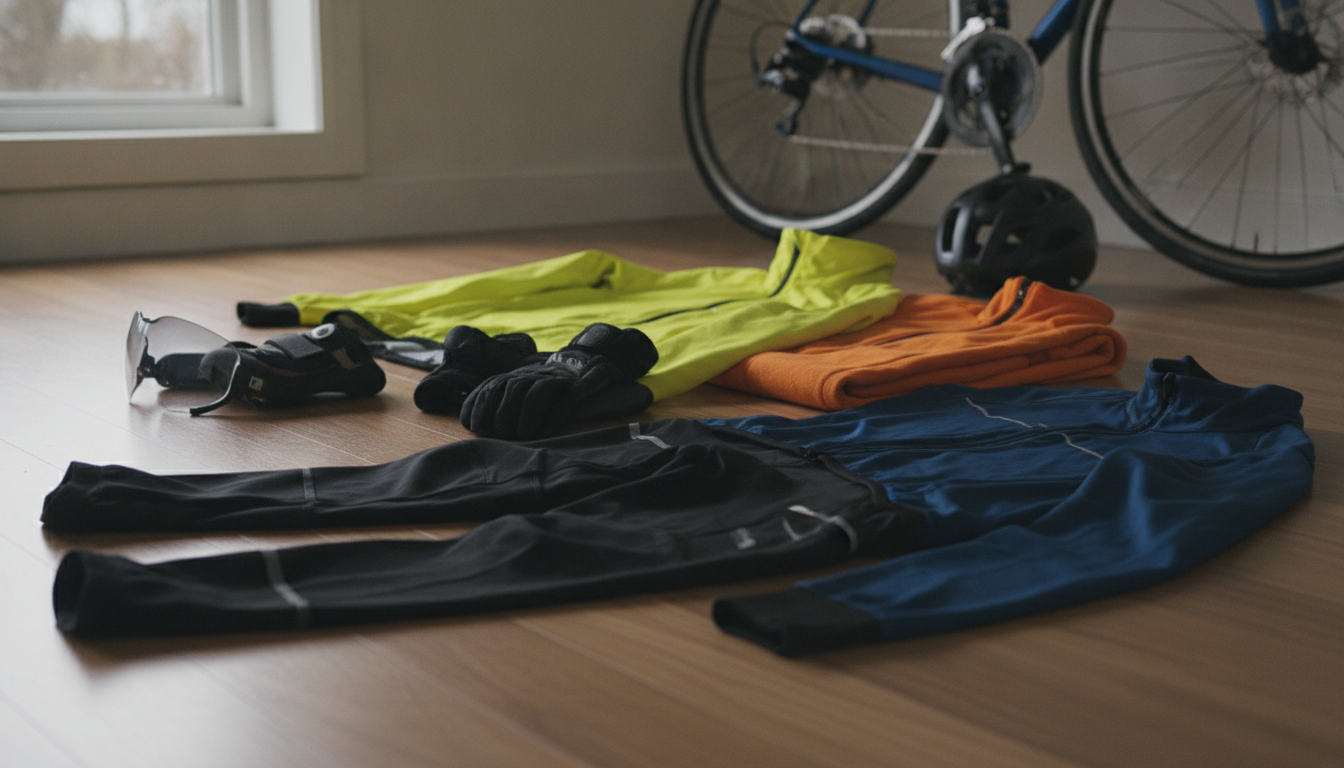
The best winter clothing for cycling is a layered setup that blocks wind, manages sweat, and keeps extremities warm without feeling bulky. Start with a moisture-wicking base layer, add an insulating mid-layer, and finish with a windproof, water-resistant outer shell. This combination keeps you comfortable across changing temperatures and effort levels, especially when climbs, descents, and stoplights can swing how cold you feel.
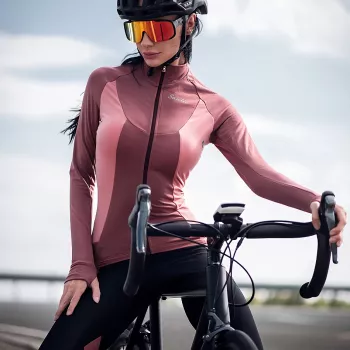
A performance base layer (synthetic or merino) should fit close to the skin to move sweat away quickly. Over that, choose a thermal jersey or light fleece mid-layer for warmth. Top it off with a cycling-specific winter jacket or softshell that’s windproof in front, breathable where you sweat most, and cut longer in back for coverage in a riding position.
Cold hands and feet can end a ride fast, even if your torso feels fine. Wear insulated, windproof gloves (or lobster-style mitts for very low temps), wool socks, and shoe covers to block wind. For your head, a thin skull cap or thermal headband under the helmet plus a neck gaiter helps seal heat loss without restricting ventilation.
Thermal bib tights are a staple for winter riding; add wind-block panels or an extra shell layer on the coldest days. If roads are wet, look for water-resistant fabrics and consider fenders to reduce chill from spray. Short daylight hours make reflective details and bright colors a smart safety upgrade.
For a deeper breakdown of what to wear by conditions and how to fine-tune your kit, visit this complete winter cycling clothing guide.
For Best Winter Cycling Clothing: Layering for Warmth, the best answer depends on fit, material, care instructions, and how the product will be used day to day.
Wear wool socks, use windproof shoe covers, and choose insulated winter cycling shoes when temperatures drop significantly. Keeping your core warm also helps circulation to your feet.











Leave a comment